Viral ‘too fat to fly’ hawk makes major progress in weight loss journey
Lily Dallow Sat, November 21, 2026 at 7:06 PM UTC
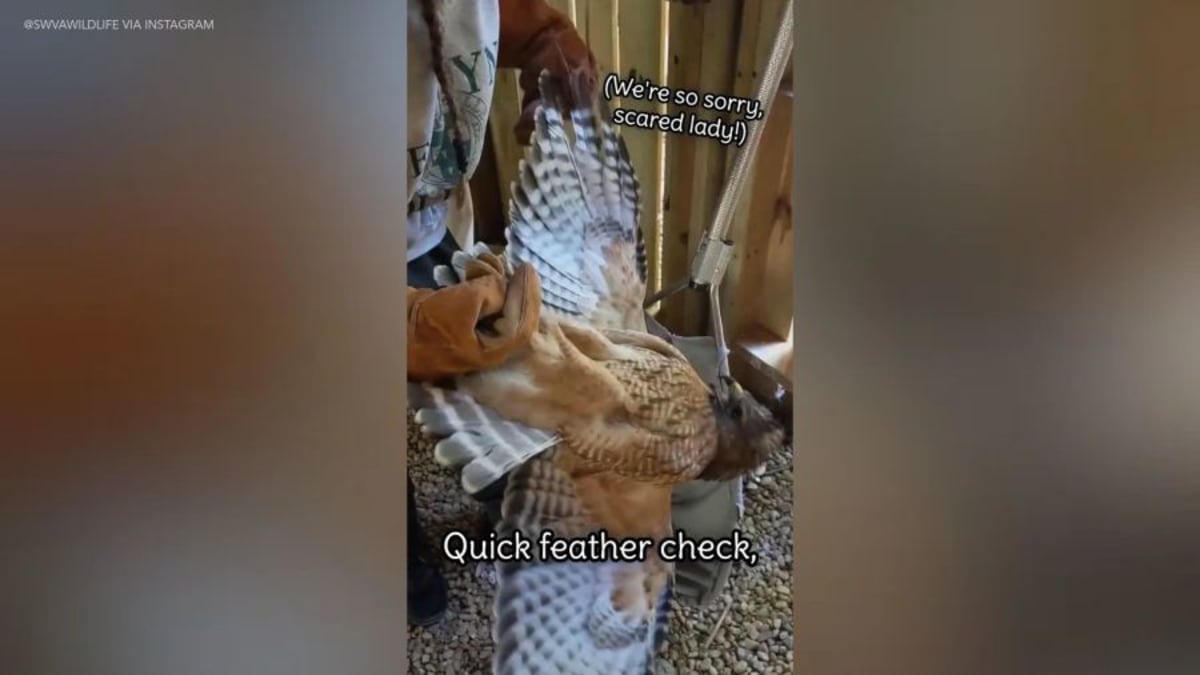
A red-shouldered hawk that became an internet sensation after eating so many neighborhood chickens that she could no longer fly is making major strides in her weight loss journey, now completing 30 laps a day as wildlife experts prepare her for a possible return to the wild.
The Southwest Virginia Wildlife Center shared the latest update Friday on the hefty hawk, officially known as RSHA 26-2599, who was discovered grounded in a driveway in early October after apparently treating a neighborhood's free-roaming chickens like an all-you-can-eat buffet.
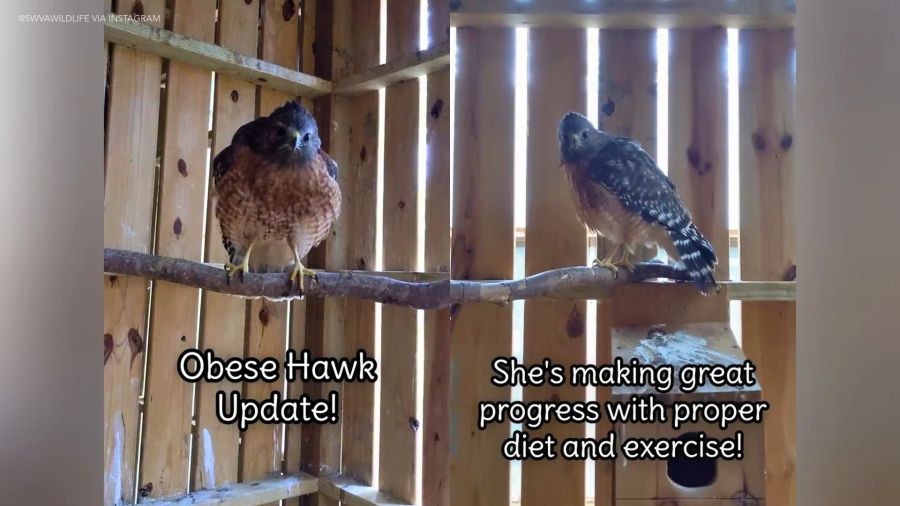
Dubbed the "too darn fat to fly" hawk, the bird initially weighed a whopping 910 grams, or just over 2 pounds, when she arrived at the wildlife center.
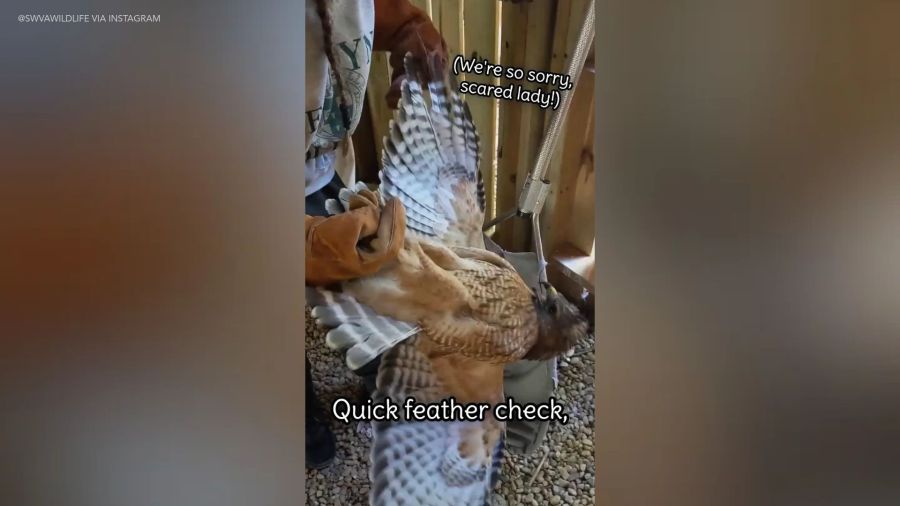
Now, after weeks of a carefully monitored diet and exercise regimen, she's down to 770 grams, or about 1.7 pounds, and is getting closer to a healthy weight.
A red-shouldered hawk undergoes supervised flight training at the Southwest Virginia Wildlife Center after being found too overweight to fly. November 2026. (Southwest Virginia Wildlife Center/Instagram)
A red-shouldered hawk undergoes supervised flight training at the Southwest Virginia Wildlife Center after being found too overweight to fly. November 2026. (Southwest Virginia Wildlife Center/Instagram)
A red-shouldered hawk undergoes supervised flight training at the Southwest Virginia Wildlife Center after being found too overweight to fly. November 2026. (Southwest Virginia Wildlife Center/Instagram)
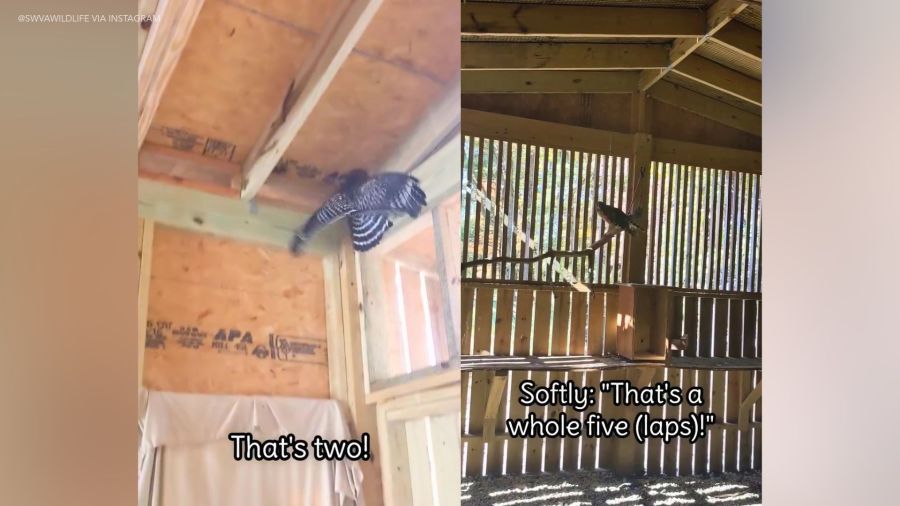
A red-shouldered hawk undergoes supervised flight training at the Southwest Virginia Wildlife Center after being found too overweight to fly. November 2026. (Southwest Virginia Wildlife Center/Instagram)
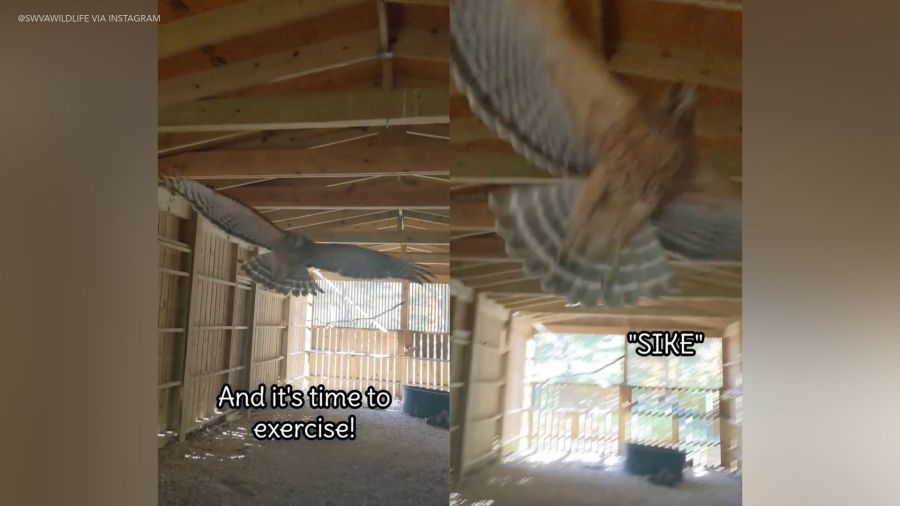
"Miss RSHA 26-2599, also known as the 'Too darn fat to fly' hawk, is flying 30 laps each day, now!" the wildlife center announced in an Instagram post.
That's a major improvement from earlier this month, when the bird could manage only four or five laps before becoming too winded to continue.
Wildlife experts explained that birds of prey, also known as raptors, don't typically exercise on their own in captivity, meaning rehabilitation staff must help them build the strength and endurance needed to survive in the wild.
With only one 50-foot flight enclosure available and numerous birds undergoing rehabilitation, staff members have been taking the hawk out of her enclosure for supervised daily flights.
"Raptors won't exercise themselves in captivity, so we have to exercise our raptors before they're cleared for release," the center explained.
The hawk has gradually worked her way up from five laps to 30 under the supervision of wildlife veterinarians and rehabilitation staff.
Her weight loss has also been closely monitored. Although she briefly dropped to 760 grams, she gained back 10 grams over the past week, something experts say isn't necessarily a setback.
"But that's alright, as long as she isn't losing too quickly!" the center wrote.
The bird's unusual journey began when she was discovered unable to fly in a driveway about a mile from the wildlife center.
Veterinarians initially suspected an injury or illness, but tests for broken bones, lead toxicity, head trauma and other common problems came back normal.
The real culprit? Too many chickens.
After investigating how a wild hawk could become so overweight, wildlife experts learned that chickens had been disappearing from a nearby property at an alarming rate.
According to the center, the hawk had apparently developed a routine of snatching an easy meal, resting in nearby trees and returning for more whenever the chickens were let outside.
The seemingly endless food supply eventually left her so overweight that she could no longer take flight.
While her story has amused thousands of social media users, wildlife experts have emphasized that her condition posed a serious danger, leaving her vulnerable to predators.
Now, with her flying abilities steadily improving, the hawk could be approaching the final stages of her rehabilitation.
"Once she reaches a body condition deemed appropriate for her, and she passes her hunting tests, she should be a candidate for release!" the center said.
But there's still one concern about her eventual return to the wild.
"We can only hope that she won't immediately find herself surrounded by a chicken buffet again," the center joked.
Wildlife experts continue to urge residents not to feed wild animals, directly or indirectly, and recommend keeping backyard chickens in covered enclosures to prevent similar situations.
Copyright 2026 Nexstar Media, Inc.
Source: Nature
